The Background Detail That Does Not Explain the Whole Story
Learn how to separate news context from a causal explanation, identify what a background detail can support and see where the account leaves a gap.
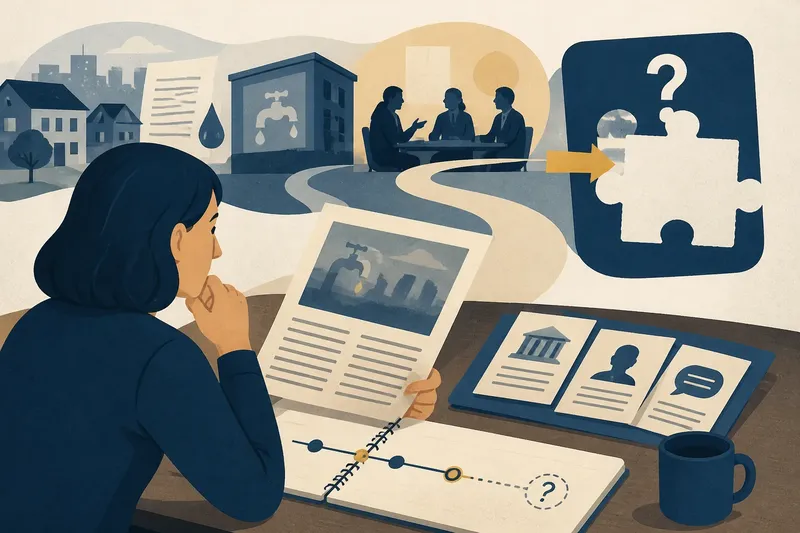
The most common mistake in reading news context is treating an earlier event as the explanation for a current one. That can make a story seem more conclusive than it is: a history of disputes or policy changes may clarify why an event matters, without showing what caused it.
Context and cause
Context places an event within a broader setting. It might describe an institution’s past decisions, conditions in a community or the sequence of events leading up to a report. Cause is a more specific claim: it says that one thing helped bring about another.
Those roles can overlap, but a detail’s relevance does not establish a causal connection. A history of water restrictions may explain why a closure matters to residents; it does not, by itself, show that restrictions caused the closure. The story needs to make the connection clear and support it.
As you read, notice whether a paragraph is supplying setting, describing an event or explaining a relationship. This keeps useful background in view without asking it to do more than it can.
Three reading approaches
Different questions call for different ways of reading. You can focus on the explanation, put events in order or examine how a story builds its account from several kinds of material.
Follow the explanation
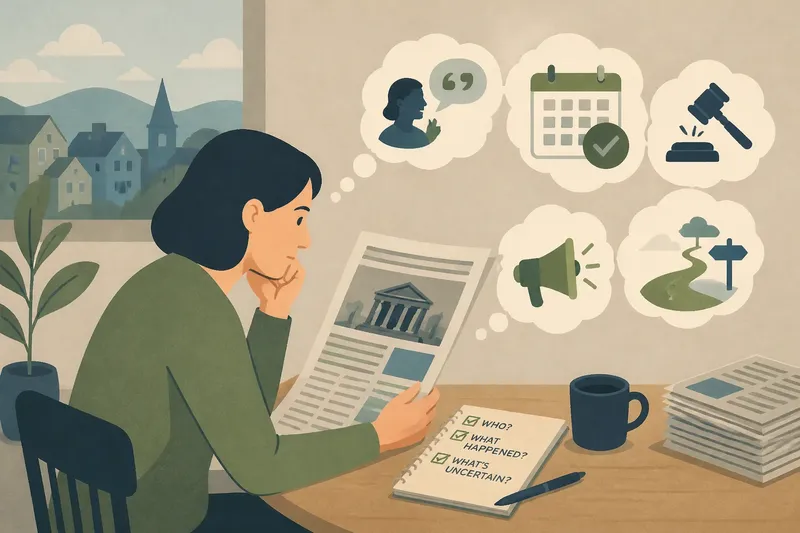
Identify the story’s central explanation, then look for the link between the events it connects. Is the account describing a sequence, or does it show why one event affected another? A statement that a decision preceded an interruption establishes order; it does not necessarily explain the interruption.
This approach is useful when a report assigns responsibility or describes a cause. It keeps your attention on the explanation itself, rather than on every historical detail surrounding it.
Lay out the sequence
Write down the relevant events in the order the story gives them: what happened before, during and after the event in question. Note any missing point, such as when a decision took effect or when a reported consequence began.
A timeline can show that a proposed cause came after its supposed effect, or reveal that the account leaves the order unclear. It cannot establish causation on its own; other information may be needed to explain the relationship.
Compare account types
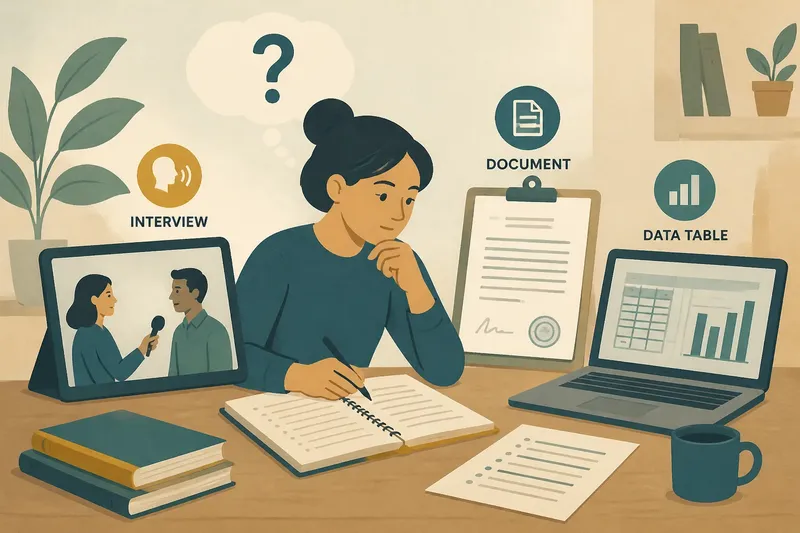
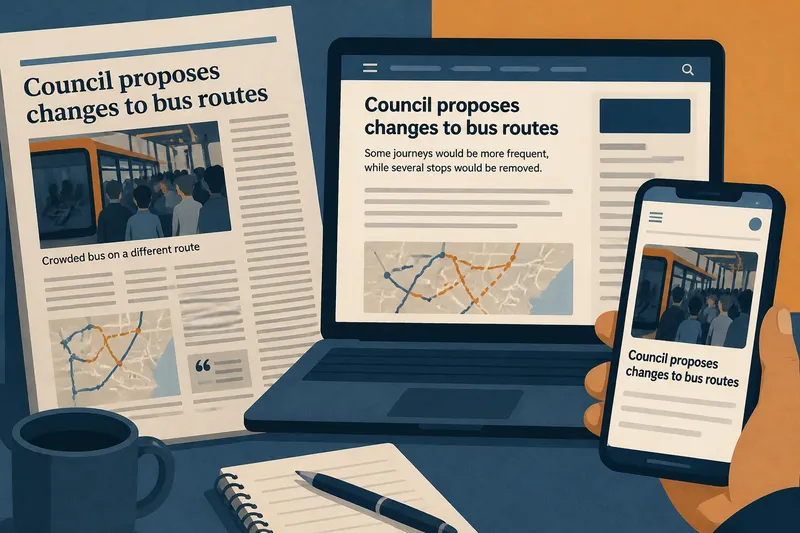
News stories may combine official records, interviews, eyewitness accounts and technical explanations. Read each as a different kind of contribution: a notice might set out a rule, while an interview might describe how a person experienced its effects.
Ask what each account covers and where its limits lie. A record can establish what it says without explaining every consequence; a person’s account can illuminate an experience without settling a wider question about cause.
How should you read context?
What makes a detail relevant?
A detail is relevant if it helps explain the setting, significance or sequence of the event. Ask which part of the story it clarifies, rather than assuming that any nearby background supports the main explanation.
Can a timeline prove cause?
No. A timeline helps establish order and may expose a contradiction, but one event occurring before another does not by itself explain the connection between them.
What if accounts differ?
Check whether the accounts refer to the same period, place and question. They may agree on the underlying event while offering different interpretations, so separate what each says happened from what it says the event means.
How can you spot a missing link?
State what the story establishes and what connection remains unclear. For example, it may describe an earlier decision and a later outcome without showing how the decision contributed to that outcome.
Check the account
Use these checks to decide what a background detail can support. If an item points to a gap, keep the alternative action in view rather than treating the gap as proof that the explanation is false.
- Check whether the detail describes the setting; if it does, use it to understand why the event matters, but do not treat it as proof of cause. If it makes no difference to the event’s meaning, set it aside as peripheral background.
- Check whether the proposed cause occurred before the reported outcome; if it did, continue looking for a link between them. If it came afterwards, do not accept it as the cause and look for an earlier explanation.
- Check whether the story identifies how one event affected another; if it does, assess the material supporting that connection. If it does not, describe the explanation as incomplete and look for further reporting or records.
- Check what a cited document actually records; if it directly addresses the decision at issue, use it to clarify that decision. If it covers only a general rule, do not use it to settle how the rule affected a particular event.
- Check whether an interviewee speaks from direct experience; if so, use the account for what that person observed or experienced. If the claim extends beyond that experience, look for another source that addresses the wider point.
- Check whether two accounts discuss the same place, period and claim; if they do, compare their specific statements. If they address different questions, keep their conclusions separate instead of treating them as a direct contradiction.
Trace one explanation
Say you are reading an invented local report that links a service interruption to a council’s decision to change maintenance arrangements. The report also mentions older complaints, but gives no dates for the maintenance change or the interruption.
First, you mark the claims: the council changed arrangements, the service was interrupted, and the change caused the interruption. Next, you put the available information in sequence; because the report supplies no dates, the order and timing remain unclear. Then you check the cited material: an invented council notice confirms that arrangements changed, while the older complaints establish that residents had raised concerns before. Neither item connects the change to this interruption.
Your resulting judgement is limited but useful: the background explains why the service matters, and the notice supports the claim that arrangements changed, but the report has not shown that the change caused the interruption. You would need a source addressing the timing or operational link to assess that explanation further.
State what remains open
When an account leaves a connection unclear, describe the gap precisely: “The report gives the earlier decision and the later outcome, but does not explain how the first contributed to the second.” That is more informative than saying the story lacks context, because it identifies what further information would matter.
For news context, the useful question is not simply how much history a story includes, but what that history helps establish. Keep the background that clarifies the event, and keep the explanation provisional when the link between cause and outcome remains open.